



Creating a smarter helpline with the Bat Conservation Trust
A conservation lifeline in need of care
The lovely team at the Bat Conservation Trust had a heartfelt concern: their helpline database—a vital system for bat conservation across Britain—was built decades ago and while it had done its job, the system had gradually evolved into something that was no longer serving them as well as it could.
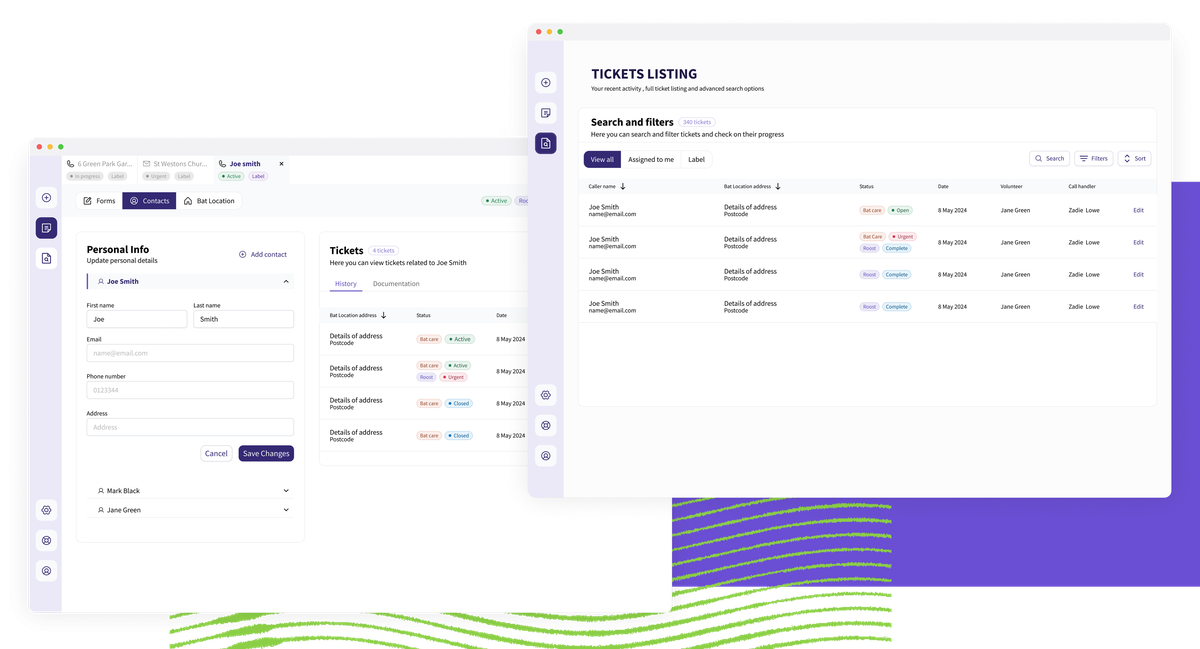
The helpline serves as a crucial connection point for the British public to report bat sightings, seek help for injured bats, access rabies advice, and connect with local bat carers. The system had become unwieldy and difficult to use, creating challenges for the volunteers who operate the helpline. Their previous system lacked consistency, with no required fields and limited ability to guide call handlers through the right questions for each scenario.
We needed to create something that would not only solve today's challenges but bring efficiency and consistency to how the organisation collects, understands, and acts on data about our UK bat populations.
Solutions that work for people—and bats
We sat down with the passionate team at the Bat Conservation Trust and crafted a comprehensive Django-React platform tailored specifically to their unique needs. The solution needed to serve everyone—from the dedicated volunteers answering calls to the government agencies analysing population data—all while ultimately benefiting the protected bat species that make Britain's evenings so magical.
Rather than simply updating old technology, we reimagined the entire experience with features that create real-world impact:
💬 Smart, conversational forms
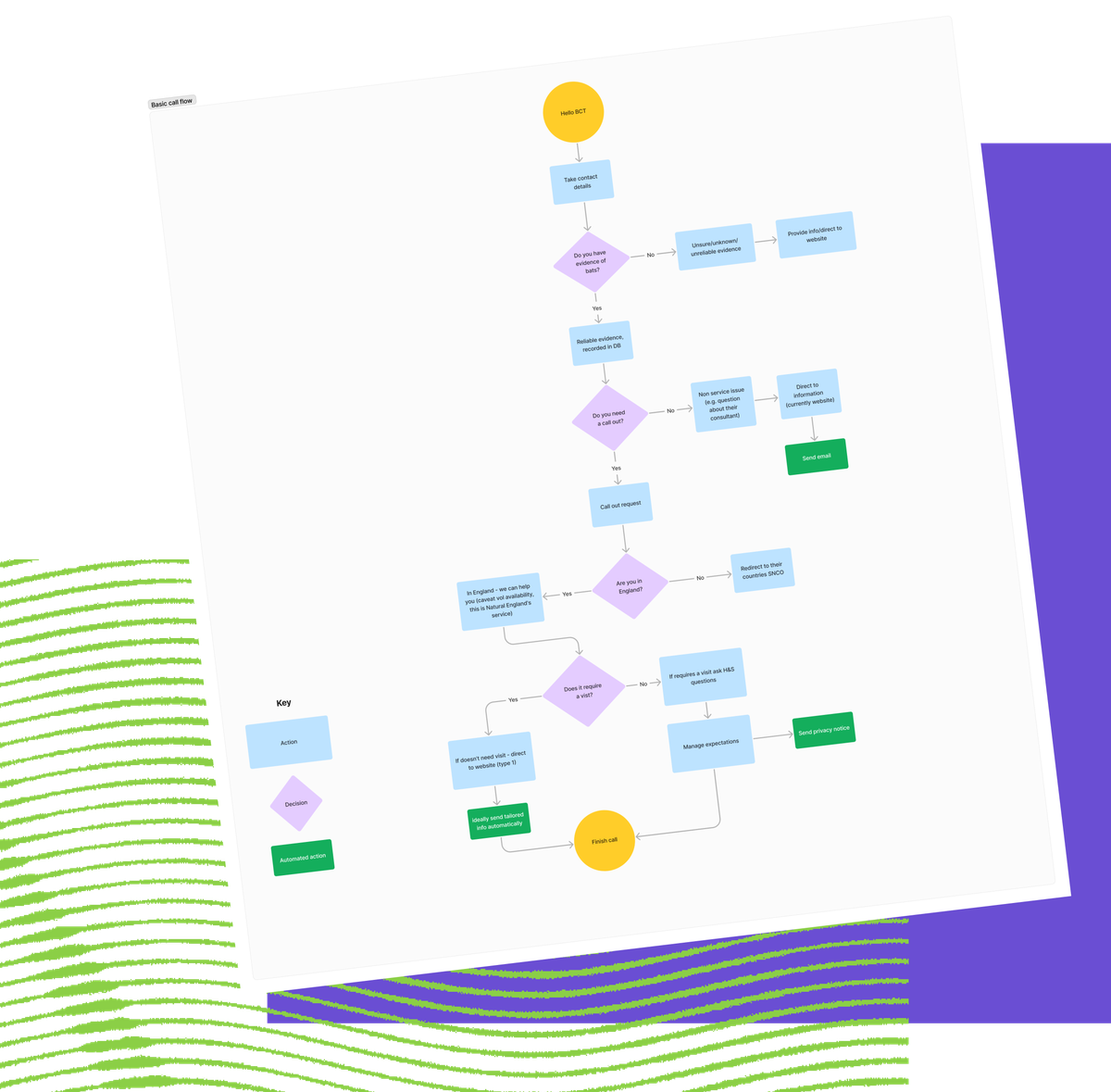
The new system gently guides call handlers through conversations with adaptive question sets. We thoughtfully added over 200 new questions, but implemented them in a way that makes conversations more natural, not more complicated. If you answer "yes" to one question, it brings up a relevant follow-up set; answer "no," and it takes you down a different path. This ensures they gather exactly the right information for each unique situation without overwhelming either the handler or the caller, leading to more consistent and helpful service regardless of which volunteer answers the phone.
🗺️ Clever mapping with GeoDjango
We implemented thoughtful polygon-based location mapping that goes beyond simple radius calculations. Instead of assuming a volunteer can travel "10 miles in any direction" (which might mean a quick 10-minute drive in the Cotswolds but a 45-minute journey in London traffic), the system now uses precise geographical boundaries to connect callers with the nearest available bat carers. This means injured or vulnerable bats receive attention more quickly, potentially saving more of these protected creatures.
✨ A wonderfully simple user experience
We've dramatically simplified the volunteer onboarding process. Previously, new volunteers faced a daunting 100-page handbook before answering their first call. Now, with an intuitive interface that guides users through each interaction, that training document has been condensed to just three pages. This simplified training means the Trust can bring new seasonal volunteers into their community much more quickly–especially during their busy periods.
⚙️ Helpful automated workflows
Previously manual tasks like sending privacy notices to callers have been thoughtfully automated. These micro-process improvements—each saving perhaps five minutes but occurring multiple times daily—add up to significant time savings that call handlers can redirect toward more meaningful conservation work.
📊 Enhanced reporting capabilities
The system now captures structured, consistent information with required fields and standardised formats. This rich data enables the Trust to provide detailed insights to Natural England and others, directly supporting evidence-based conservation policy across Britain. The improved quality and consistency of data collection helps the Trust identify trends in bat populations that were previously difficult to spot—vital for protecting these important species across the UK.
Massive data migration with purpose
A project of this scale required careful handling of sensitive and valuable historical data. We successfully migrated:
- Over 300,000 people records
- 209,000 helpline tickets
- Approximately 200,000 location records
This represents over a million lines of imported data—critical information that helps map bat populations across the UK. The successful migration means the Bat Conservation Trust retained their historical context while gaining a modern platform for future growth.
Looking forward
This project represents more than just a technology upgrade—it's a heartfelt transformation in how conservation data can support Britain's precious wildlife. By replacing an outdated system with thoughtful, purpose-built technology, we've helped create a foundation for more effective bat conservation across the UK for years to come.
The new system demonstrates what happens when technical expertise meets genuine passion for wildlife protection. For an organisation whose data directly influences conservation policies, the Bat Conservation Trust now has a digital system that captures information with the care and reliability that our native bat species truly deserve.