How lobbying forgot the humans — testing the theory at ECF
Dispatches from the unconference

What is ECF and why does it matter?
This was possibly my 10th ECF - or rather Campaigning Forum, as it is now called. It’s not my backstory to tell, but briefly… going way back to the early noughties, a group of early-adopting digital campaigners got together and started something pretty cool. A way for people in progressive organisations looking for ways to collaborate and share learnings on how to harness digital for the power of good was formed in the shape of an unconference.
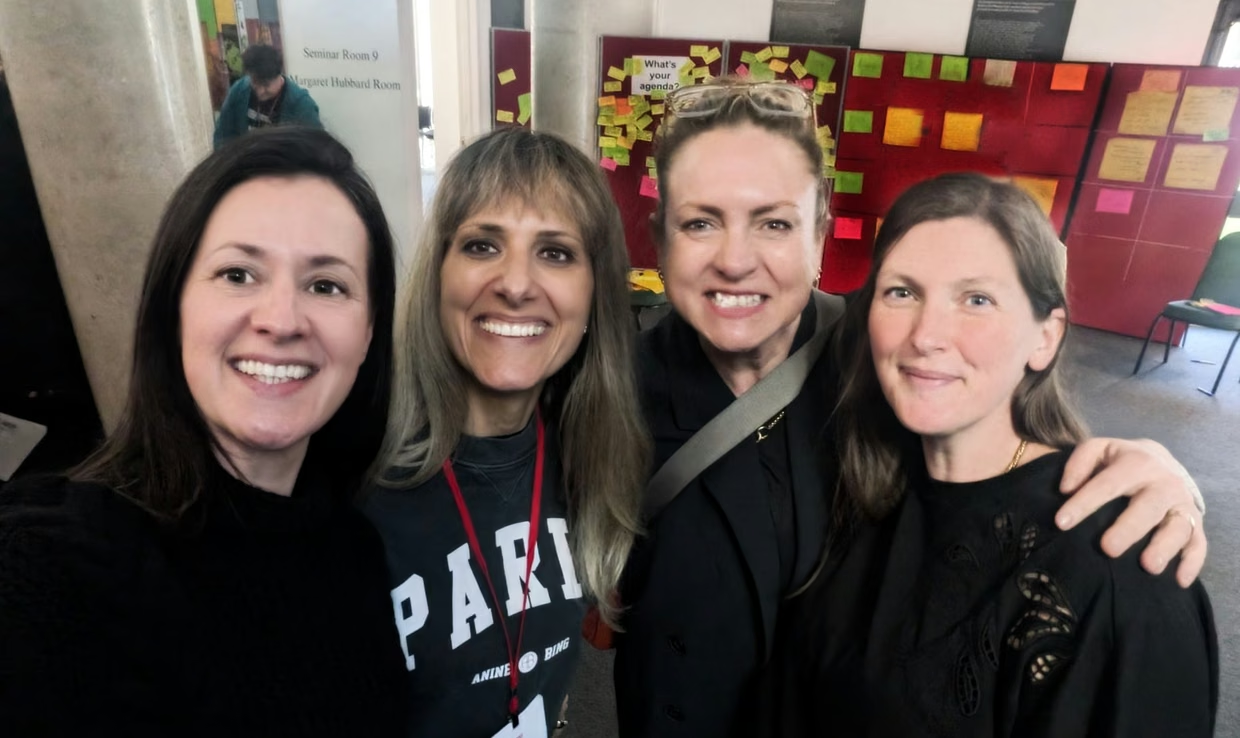
There are a core group of people who I have known throughout my time in this world, all incredibly clever and impressive people. Here are just a few of them. We all know what a treat it is meeting up IRL these days (well, us rural-living folk certainly, and I wasn’t the only person who got up at 5am to get there).
Why I was there?
If you don’t know the unconference/open space format, check it out. You have to trust the process, but it works. There is no - or little - agenda, and the content of the day is decided by those who are in the room. Together we shape the conversations that will happen, the ideas shared, the problems solved.
So what was I there to share? Well, this year I’ve been interviewing MPs and their offices, as well as senior digital campaigners about what is and isn’t working about the state of affairs right now. I’ve worked in campaigning and political tech for most of my career. It’s something I care about a lot! I want people to be able to harness the power of digital to make a difference. I believe in the direct line constituents have with their elected representatives. But the system is beyond creaky, it’s on its knees. Time to find out what people at the coalface felt about it all.
It's about the humans
I have one core theme: it’s about humans. We at The Developer Society hold one thing (at least) as true: if the technology doesn’t work for the humans who use it, it’s pointless. So, I started thinking about those humans when it comes to campaigning and have uncovered two main themes: The Zone of Political Influence (concept borrowed from EdPsych - Zone of Proximal Development) and the invisible layer - that’s the people who are processing the communication on the other end. Why are we overlooking their needs?
Two sessions, one very patient audience
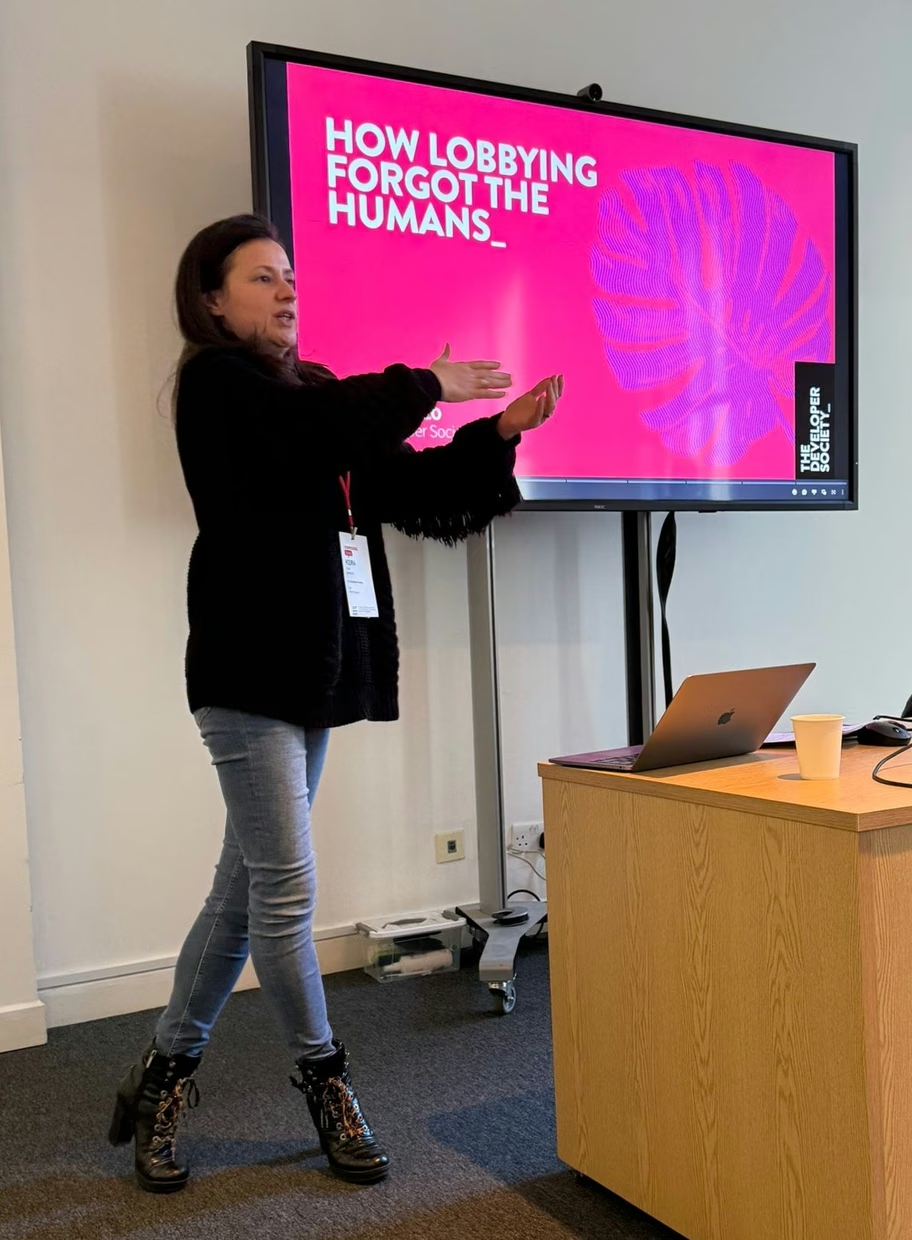
I ran 2 sessions, an hour-long semi-workshop session, followed by an Ignite talk at the end of the day. What I hadn’t expected was how many people came to my workshop, meaning that they all got to hear it again at the end of the day. Lucky them!
What the room had to say
The discussion that followed was, as you’d expect from the calibre of ECF attendees, the best part — this exactly why you go to ECF. The room pushed back in all the right ways. People with serious campaign creds refined and also pushed back on my thinking: on what volume actually signals to an MP's office (spoiler: nobody agrees, and that's precisely the problem), on the tension between running campaigns for supporter engagement versus genuine parliamentary impact and so on. There were also some genuinely off the charts examples of what good looks like when organisations think creatively. I came away with more questions than answers, which is how it should be.
So what am I actually finding?
In short: we have spent twenty years perfecting the tools of mass email lobbying without ever really asking the humans on the receiving end what they need. In all honesty, MPs don't see most of what lands in their inbox — it goes to researchers and caseworkers working with creaking systems, brilliant people who are so often overlooked when it comes to this element of lobbying.
Here’s the part that blew me away: Nobody — and I mean nobody, across years of working in this industry — ever asked me how a campaign email plays nicely with the tools on the parliamentary side. That revelation alone tells you something eye-opening about where we've gone wrong.
The second theme is about political reality. As brutal as it sounds, an MP’s power in the vast majority of instances comes down to headed paper. And that headed paper is doing some serious heavy-lifting let me tell you! Yet we routinely ask backbench opposition MPs to stop a government bill with a 200-seat majority, or contact MPs about issues so far outside their sphere that it actively alienates them. I'm calling this the Zone of Political Influence — borrowed shamelessly from EdPsych’s ‘Zone of Proximal Development’. In my interpretation, it's the sweet spot between what campaigns ask MPs to do and what they can actually achieve. Without taking this seriously, we're setting everyone up to fail. Constituents’ expectations are raised high about what will follow from their action. From the MP’s office, asking them to do something they are unable to impact can actively alienate them.
The ticking alarm clock
Here’s the massive bummer… the window to fix it is closing faster than we think. Want to talk to me about how you’re finding digital campaigning? I’d love to hear your ideas as we think about and work on something better fit for purpose. Get in touch for an informal chat or an interview to share your thoughts!